i.
FR · Paris
Speaker to be confirmed
Institut de Physique du Globe de Paris
Topic
Near-real-time ionospheric imaging of seismic sources
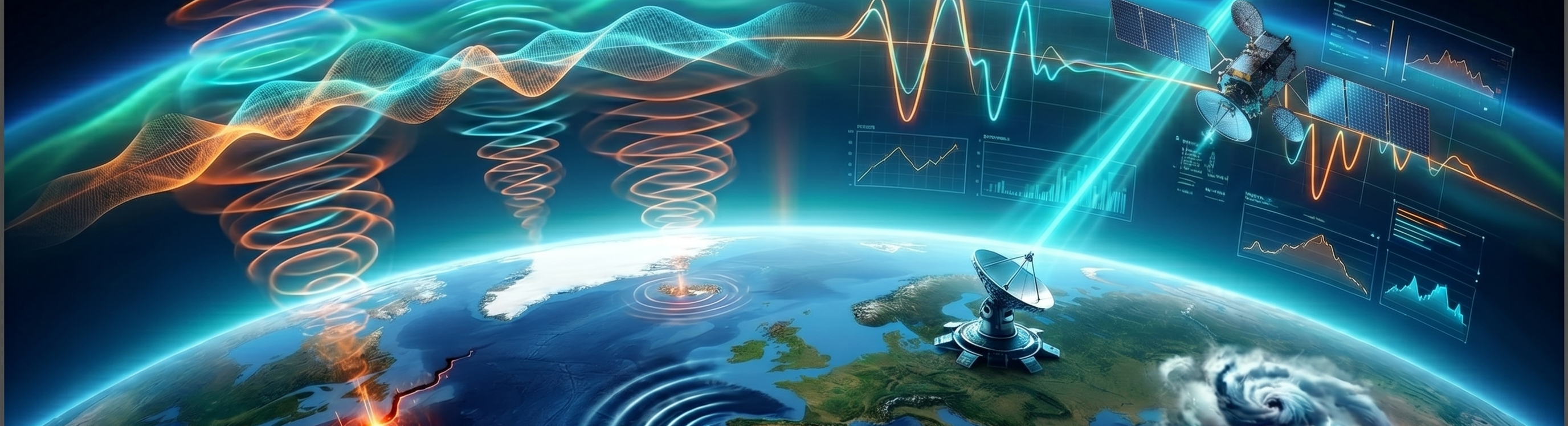
An interdisciplinary meeting on lithosphere–atmosphere–ionosphere coupling, gathering invited speakers from Brazil, France, Peru, and Chile at the National Institute for Space Research.
Earthquakes, tsunamis, volcanic eruptions and severe atmospheric events generate disturbances that propagate upward and can be detected hundreds of kilometres above the surface. IonoHazards brings together the scientists who read those signatures.
Recent advances in observational capabilities — including GNSS-based total electron content (TEC) measurements, ionosondes, incoherent scatter radars and dedicated satellite missions — have substantially enhanced our ability to detect and characterise ionospheric perturbations associated with natural hazards. These signals, often referred to as co-seismic or co-eruptive ionospheric disturbances, provide unique insight into the dynamics of lithosphere–atmosphere–ionosphere coupling.
At the same time, extreme weather events such as tropical cyclones, deep convective systems and atmospheric gravity waves induce their own variability in the upper atmosphere, complicating the identification and interpretation of signals tied to solid-Earth processes. The workshop is designed to confront precisely this interpretive frontier.
Bringing together specialists in seismology, ionospheric physics, atmospheric science and space weather, IonoHazards seeks to consolidate the role of South America — and Brazil in particular — as a leading region for research on geophysical coupling and natural hazard monitoring.
The scientific programme is built around eighteen invited talks delivered by leading researchers from Brazilian, French, Peruvian and Chilean institutions. Speakers will address the full chain — from source mechanisms in the solid Earth to detection in the ionosphere.
Each day is structured around three morning talks and three afternoon talks, separated by coffee breaks and a midday recess. A dedicated poster session takes place on the second day.
† Specific dates, talk titles and speaker assignments to be finalised closer to the event.
Detection of ionospheric perturbations, imaging of seismic sources, physical modelling, and the application of machine learning to signal identification and characterisation.
Severe atmospheric phenomena — tropical cyclones, deep convective systems and gravity waves — as drivers of ionospheric variability through vertical coupling.
Earthquakes, tsunamis and volcanic eruptions as generators of ionospheric signatures, and their potential integration into multi-parameter early warning systems.
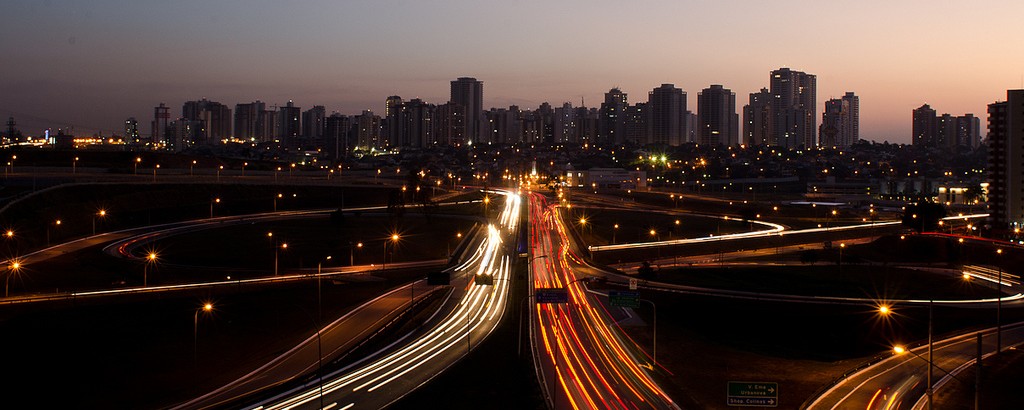
Photo of São José dos Campos · Replace with actual image